
Vinyl’s Modern Revival: Choosing the Right Turntable for Beginners
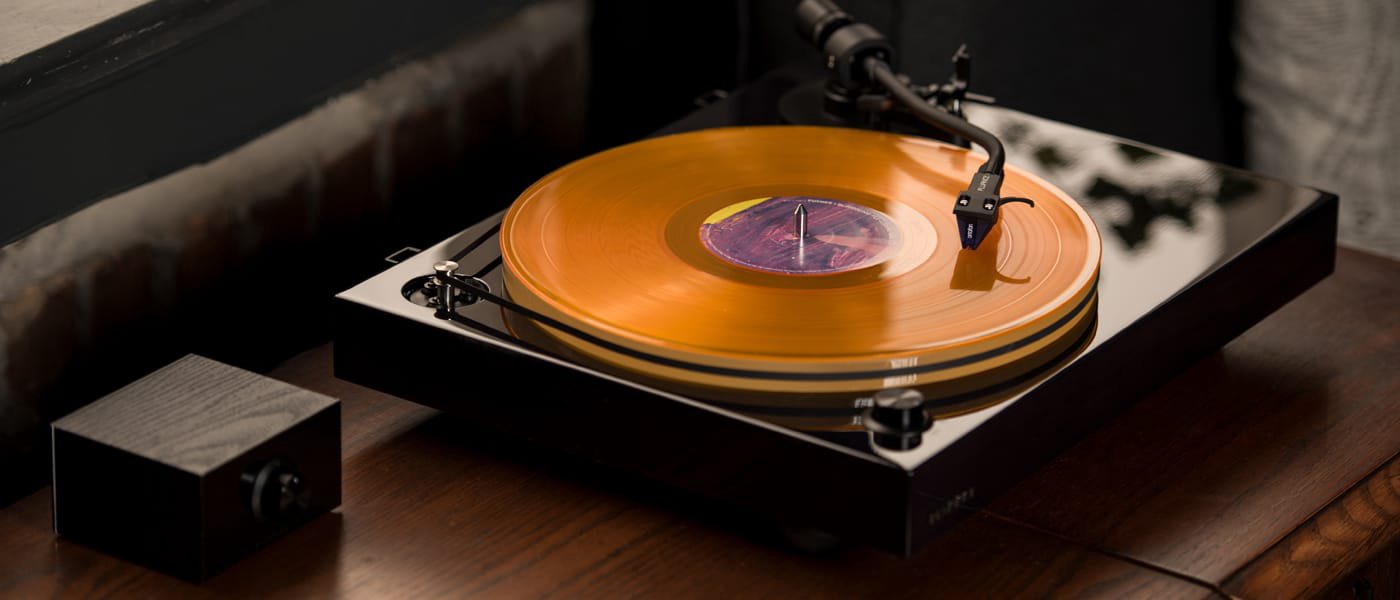
Vinyl is back — and this time it looks like it's here to stay. Just a few years ago, record collectors were a quiet community that big business barely noticed. Now everyone wants a slice of the pie. Records keep getting pricier (a story for another day), and seemingly everyone is making turntables — from entertainment giants to yesterday's startups — each one, of course, "special."
How do you avoid drowning in all this choice and getting disappointed by your very first purchase? Let's take it one step at a time: new or vintage, belt or direct drive, automatic or manual, why you need a phono preamp — and how to hook it all up afterwards.
New or Vintage?
Some say it's best to start with a vintage turntable. The logic goes like this: until the early '90s there was a turntable in nearly every home, and they were made in huge numbers — so the players themselves should be easy to find, and spare parts should be plentiful.
Sounds reasonable. But remember the gulf between a good iPhone and a no-name smartphone that breaks before it even leaves its home country. It's the same story with turntables from the '70s and '80s — vinyl's golden age. Out of millions made, only a few were truly good. Most were cheap mass-market goods to begin with, and half a century later that cheap stuff has simply turned into antiques — of exactly the same quality.
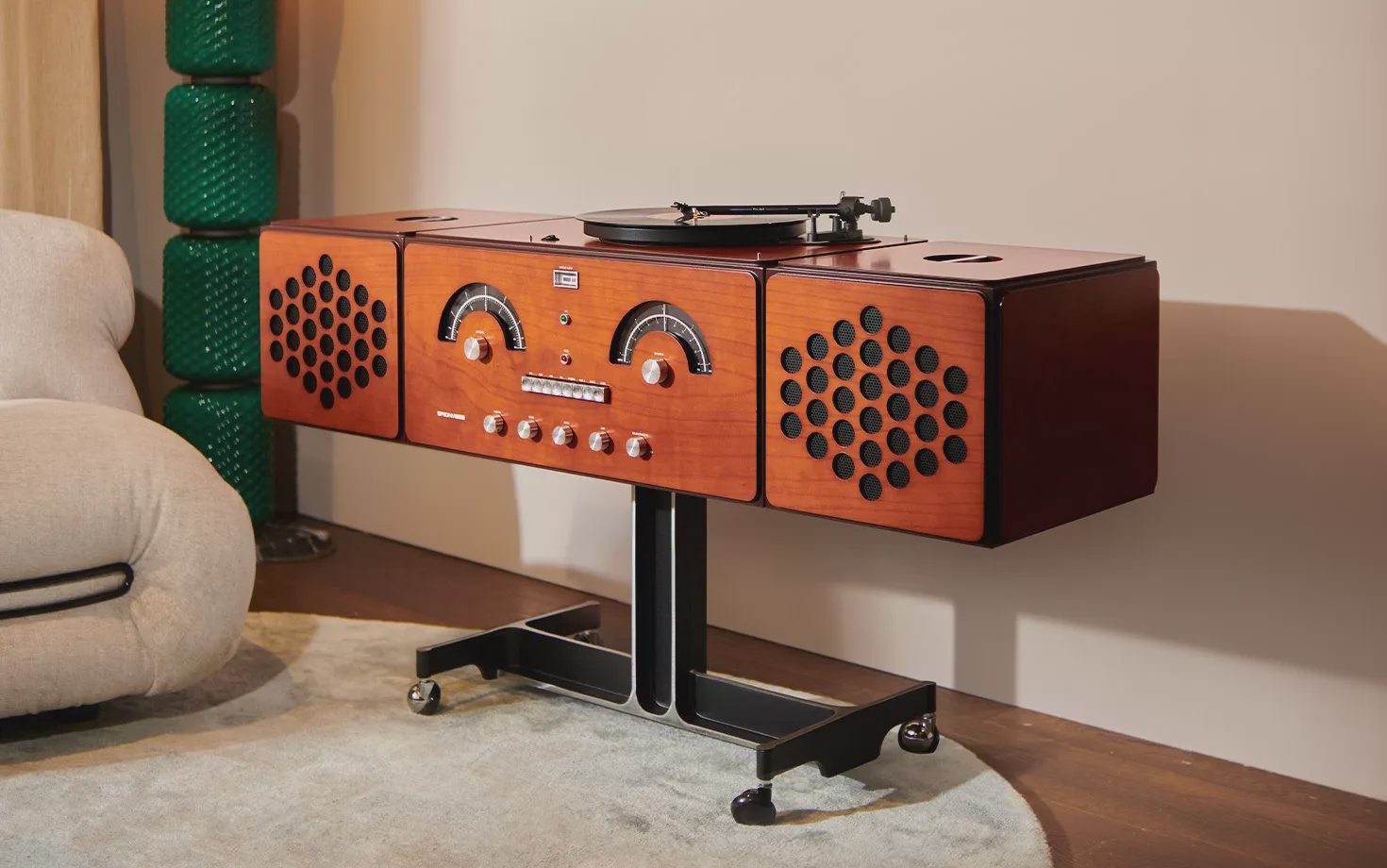
A beginner needs a player that just works: no fiddling around and no breakdown a week after you bring it home.
If you genuinely love vintage aesthetics and believe "real" vinyl is only possible on an old machine, that's perfectly fine. Just be ready for the fact that good vintage gear in decent condition costs money. Serious money.
Now imagine vinyl turns out to be a passing fancy. Will you find a buyer willing to give you back everything you paid for that classic?
The truth is, even a beautifully preserved vintage turntable is losing its fight against time. Materials age, parts wear out, and physics couldn't care less about nostalgia. Why start a hobby with an expensive repair — or worse, a problem that can't be solved at all?
One more argument. In the '70s, turntables were made by far more companies than today: only a few dozen serious brands remain. When there are fewer players, every mistake costs each of them more. These days, only a company that doesn't care about its reputation can afford to release an outright dud (sadly, exceptions do happen).
So when it comes to "new or vintage?", today's answer is simple: buy new. It's the smarter and safer choice.
Vintage Automation Is a Lottery of Its Own
One of the most common mistakes is buying a vintage turntable with auto-stop or auto-return. In players that are 30–50 years old, these mechanisms are usually the first to fail, and repairing them can be next to impossible.
Sometimes the turntable can be brought back to life by simply removing the faulty automation. But what do you end up with? A tired old player that has also lost its auto-stop. Was it worth the trouble?
And in some models the parts are so tightly linked that a failure in the automation takes out the whole turntable — for good. It's a lottery that neither a beginner nor a seasoned collector should play.
A Bit of Mechanics
Turntable mechanics deserve a long article of their own. Here we'll cover only what really matters when choosing one.
Belt Drive or Direct Drive?
This debate has long been almost religious, and each camp has its devoted supporters and its fierce critics.
Belt-drive fans accuse direct drive of adding vibration: after all, the platter sits right on the motor. The other side replies that a belt stretches and wears out over time, which means the speed can drift.
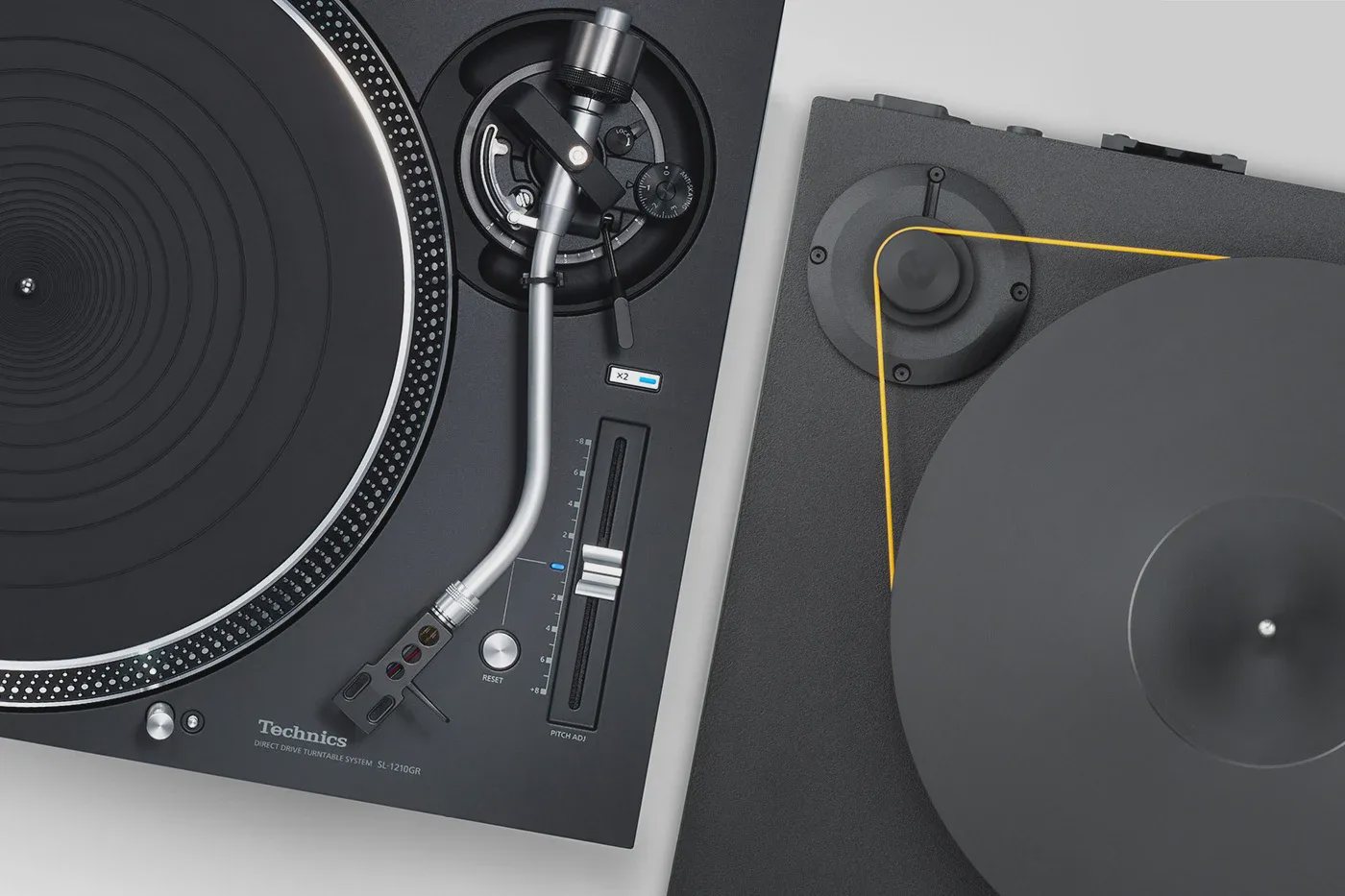
In practice, modern, well-built turntables have largely solved both problems, and at the entry level the type of drive makes little difference. Hardcore fans from either camp will object, of course, but many of their arguments are worth about as much as the advice to massage your cables before listening so the sound can "open up."
The takeaway is simple: don't get hung up on it. Pick what you like and what fits your budget — the music won't sound any worse for it.
Tracking Force and Anti-Skating
These two settings, on the other hand, really do matter — both for the sound and for the life of your records.
Tracking force is how hard the stylus presses down on the record. Too light, and the stylus will bounce and jump out of the groove on loud, busy passages. Too heavy, and it will start wearing away the groove walls.
Anti-skating offsets the sideways force that pulls the tonearm toward the center of the record during play. If it isn't set, the stylus presses harder on one groove wall than the other: the balance between the left and right channels drifts, and over time the groove wears unevenly.
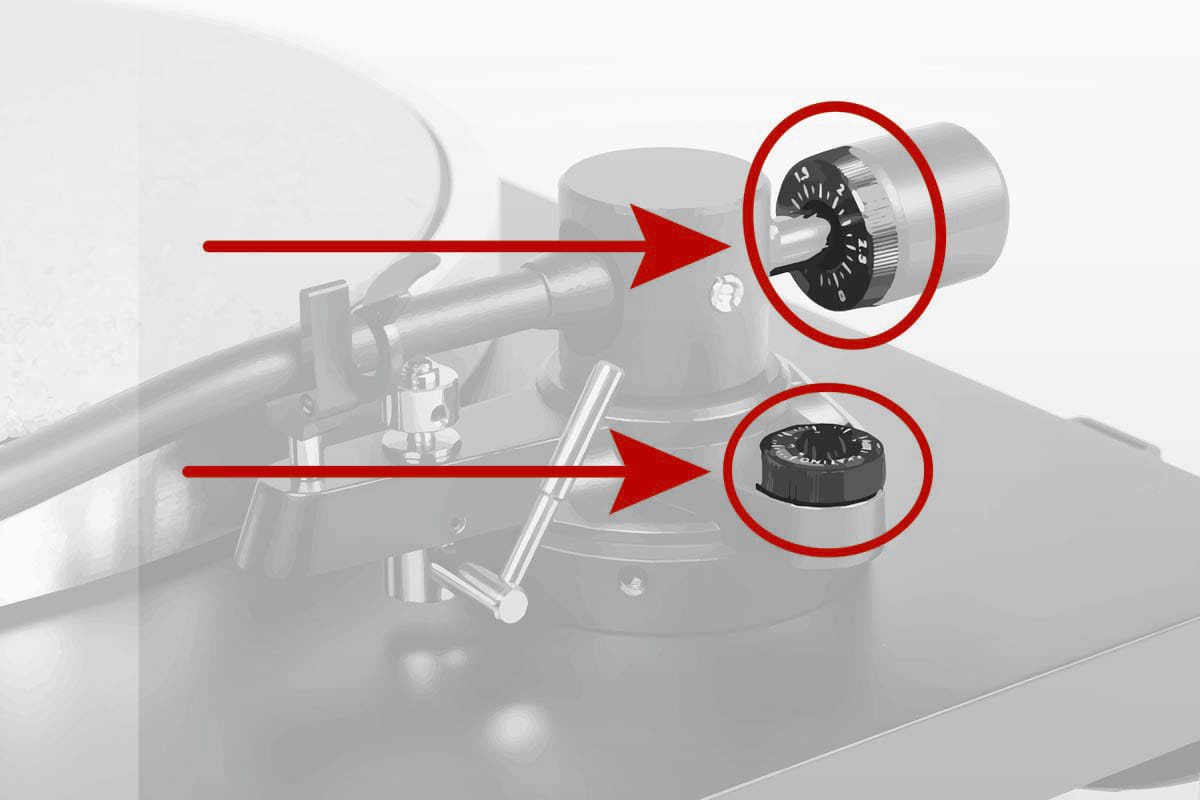
That's why you should choose a turntable that lets you set both tracking force and anti-skating by hand. "Factory-calibrated, nothing to adjust" is more marketing than reality. Without a way to fine-tune it, a turntable can easily turn into a machine for methodically destroying vinyl.
Automation: Full, Auto-Stop, or Nothing
You'd think nothing could be more convenient: put on a record, press "Start," and let the turntable handle the rest. Yet many manufacturers stubbornly skip automation altogether, and some even keep alive the myth that it ruins the sound.
The average listener, though, wants convenience as well as good sound. That's why most modern entry- and mid-level models have settled on a compromise: simple auto-stop. When the stylus reaches the end of the side, the record turns three or four more times and stops. The tonearm doesn't lift or return to its rest, but at least it doesn't keep circling the lead-out groove forever.
Fully automatic turntables still exist today too — mostly among budget models. The Audio-Technica AT-LP70X in the photo below, for example, lowers the tonearm onto the record by itself, then lifts it at the end of the side and returns it to the rest.
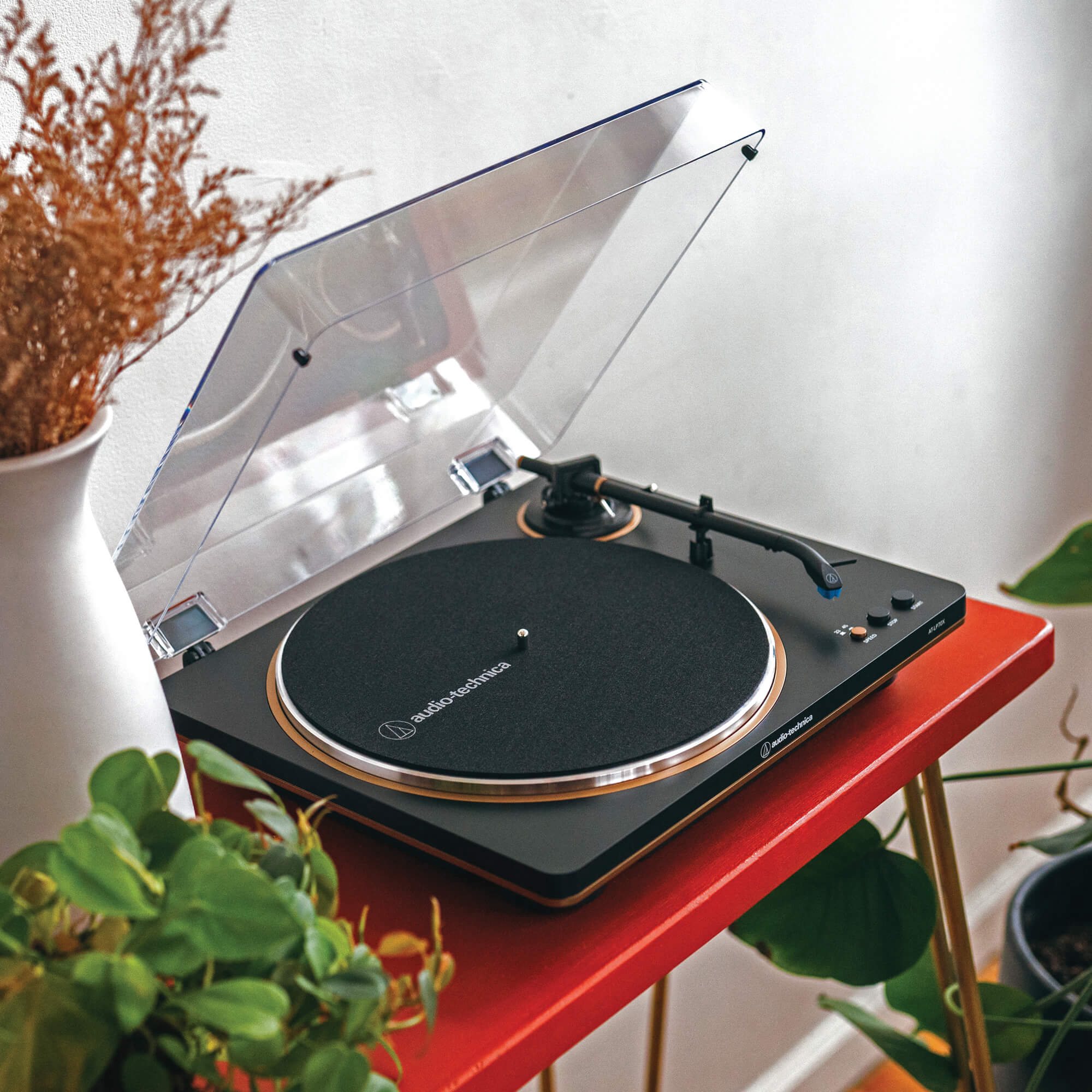
How risky is a stylus left spinning at the end of a record? No need to be dramatic: according to Fluance, for a modern stylus to literally cut through a record, the turntable would have to spin non-stop for about two weeks. Hardly anyone will leave it unattended that long. But even an extra hour of wear on both stylus and record — why put up with it? So auto-stop is the bare minimum.
The Phono Preamp: You Can't Do Without It
You can't just plug a turntable into an amplifier's line input. Put simply, the signal from the cartridge is too weak for that. Bringing it up to a proper level is the phono preamp's job.
What It Actually Does
It's commonly thought that a phono preamp is just a preamplifier for a weak signal. Amplification is indeed part of its job, but far from all of it.
When a record is cut, the frequency balance of the recording is changed on purpose:
- high frequencies are boosted — so they can be brought back down on playback, burying the surface noise of the vinyl along with them;
- low frequencies are reduced — otherwise the groove would be too wide, and far less music would fit on a side.
The phono preamp does the reverse and restores the recording's original tonal balance.
The rules for this correction are set by the RIAA curve, approved by the Recording Industry Association of America in 1954. Both the people who cut records and the people who build phono preamps follow it.
MM and MC: Two Types of Cartridges
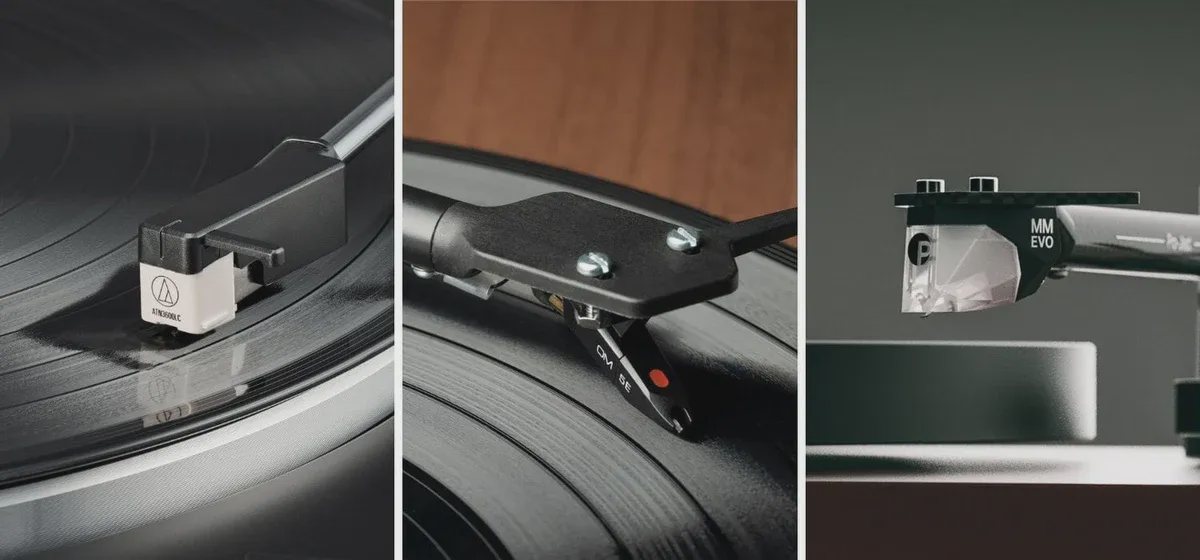
Modern turntables usually come with one of two types of cartridges:
- MM (Moving Magnet) — output voltage of about 5 mV.
- MC (Moving Coil) — about 0.5 mV, and even less for low-output models.
To bring such a signal up to line level, its voltage has to be boosted hundreds of times — and for MC, thousands of times. On top of that, cartridges differ in impedance, load capacitance, and other parameters the phono preamp has to match. That's why phono preamps come either universal (MM and MC) or designed for one type only.
The cartridge has a big say in how a turntable sounds. So it's good if it can be replaced: instead of swapping the whole player a couple of years down the line, you just fit a better cartridge — and rediscover your own collection.
Built-In or External?
A phono preamp can be built into the turntable or come as a separate box. Built-in means maximum simplicity: plug in and listen. External opens the door to experimenting… and, let's be honest, to some serious spending.
Fortunately, most modern turntables, especially entry-level ones, have a built-in preamp that can be switched off. You can start with it, and when you want more, buy an external one and flip the PHONO/LINE switch to LINE. For a beginner this is the best option: cheaper, simpler, and with room to grow.
What to Avoid
"Suitcase" Players
Portable suitcase-style turntables are a beginning collector's worst enemy. Their makers usually give no thought to tracking force or anti-skating: they fit heavy, cheap cartridges that press on the record much harder than they should, and offer no adjustments at all. As a result, records wear out far faster than on a proper turntable.
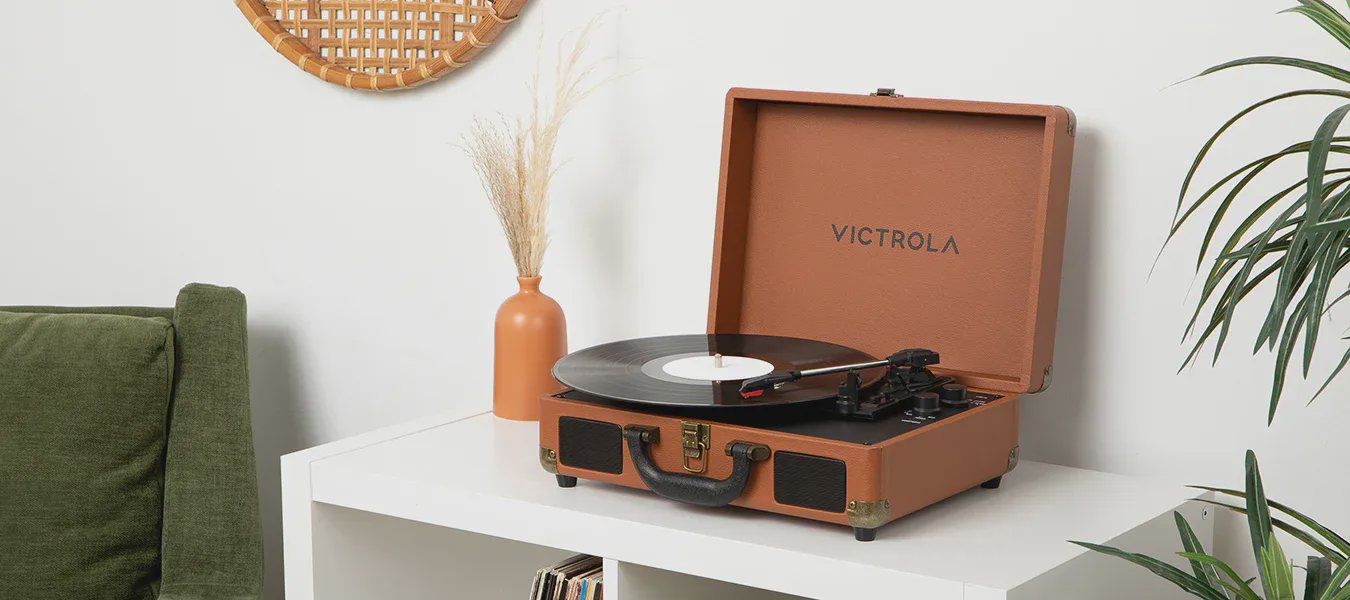
Yes, they look cute. But they're a shortcut to a ruined collection.
All-in-One Units with a Speaker
All-in-ones — a turntable and a Bluetooth speaker in a single box — have recently come back into fashion. It sounds convenient, but most of these devices come from the same companies that make the "suitcases," with everything that implies. This category is usually not worth your time.
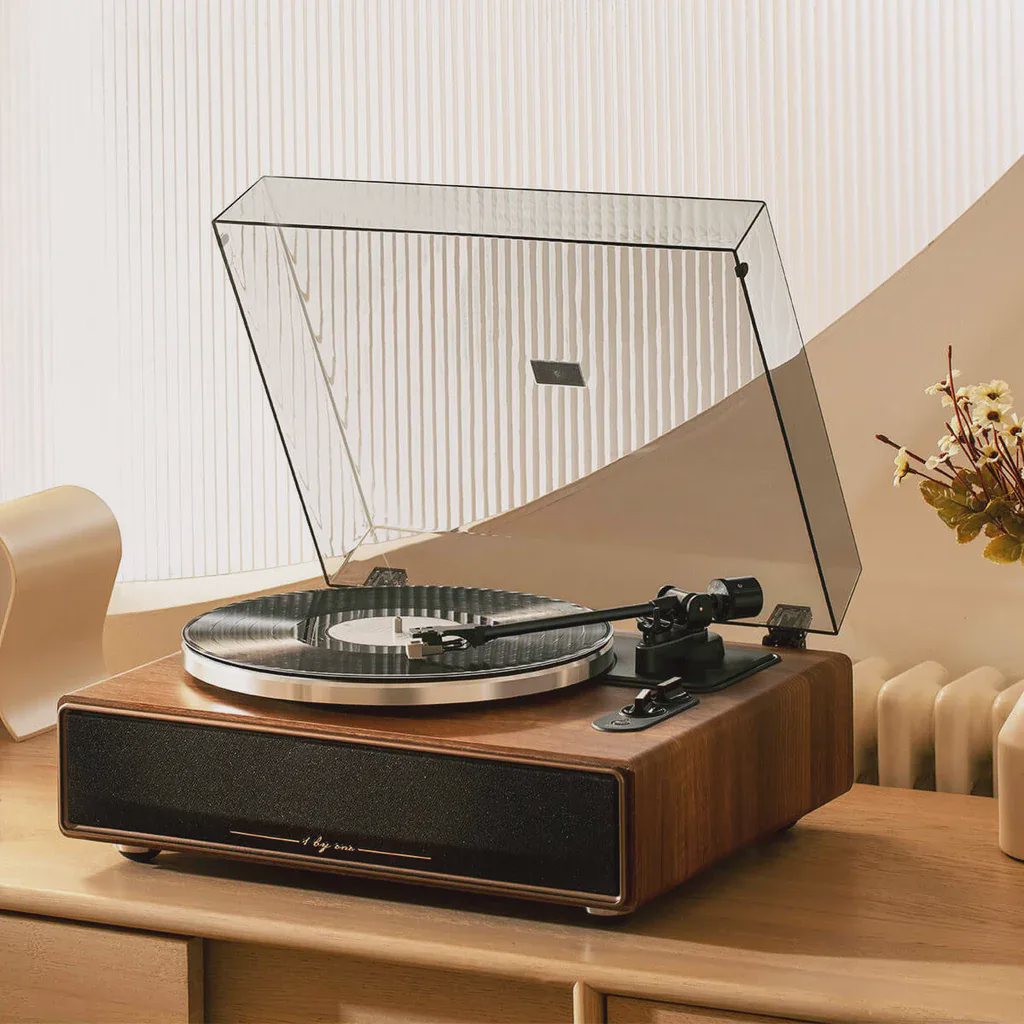
There are exceptions: reputable manufacturers do make all-in-ones that put quality ahead of marketing tricks. For people who value simplicity, they can be a decent way in without a major sacrifice in sound. But they also cost noticeably more than entry-level models.
Built-In Speakers and Undersized Platforms
Built-in speakers are almost always a bad idea. Tiny drivers can't convey even a fraction of what's on the record, and their vibration disturbs the stylus. You need separate speakers — either powered ones or passive ones with an amplifier.
One more thing: a home turntable should be big enough that the record doesn't hang over its edges. The exception is portable models like the Audio-Technica Sound Burger, but those are made for listening on the go, not at home.
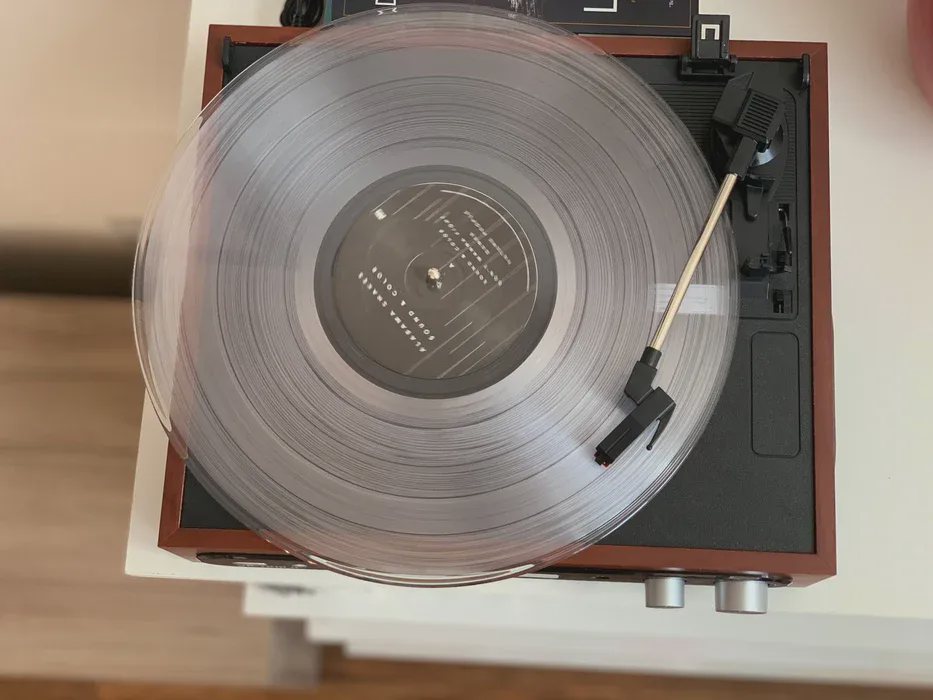
The photo above is a textbook example of what not to do: a home turntable that, for some reason, inherited every drawback of a portable one.
Bluetooth: Convenience at the Cost of Sound
Many turntables can stream audio over Bluetooth to a speaker or headphones. It's convenient, but convenience comes at a price: the analog signal is digitized and compressed, and even advanced codecs like aptX HD can't replace analog.
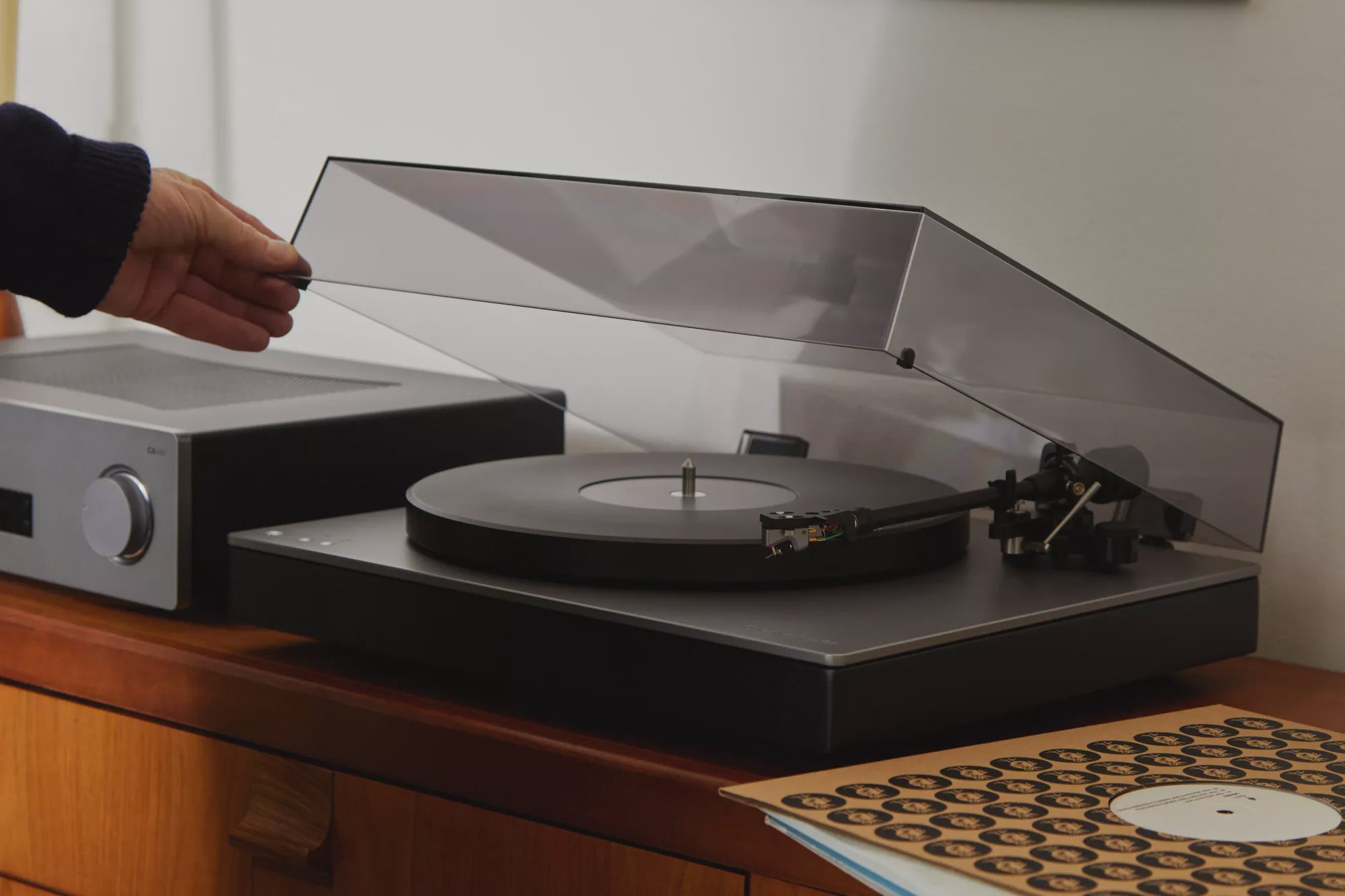
So a Bluetooth transmitter is a nice bonus, but not a reason to buy. Have it — great; don't — no big deal. A Bluetooth receiver in a turntable, however, is a warning sign: more often than not, it means built-in speakers.
A Short Checklist
Let's put it all together. A good first turntable:
- plays at 33⅓ and 45 RPM. Most of your collection will probably be 33⅓, but you're bound to come across 45s as well. Only think about 78 RPM if you're interested in old shellac records — and that's territory for seasoned collectors;
- lets you set tracking force and anti-skating by hand;
- can at least stop at the end of a side, or better yet, is fully automatic;
- has a built-in phono preamp that can be switched off;
- lets you replace the cartridge;
- has no built-in speakers;
- is no smaller than a record;
- if it has Bluetooth at all, has it as a transmitter and as a bonus.
The right turntable is the one that makes listening a pleasure and keeps your records safe for years to come.
How to Connect Your Turntable
You've chosen your turntable — now it's time to hook it up. The key thing to keep in mind: there must be a phono preamp somewhere in the chain. Here are the five main setups.
Option 1. Over Bluetooth
The simplest route: a Bluetooth turntable plus a wireless speaker. Pair them — and you're listening.
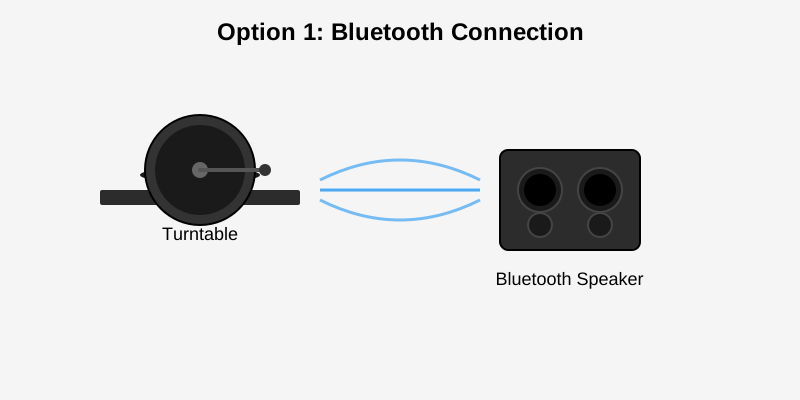
But very little of the analog sound survives here: the stereo signal is digitized, compressed, and often ends up in a mono speaker. For a second turntable in the bedroom — fine, perhaps. For serious listening — no.
Option 2. Built-In Phono Preamp, Amplifier, and Passive Speakers
One of the simplest and most affordable ways to get a fully analog signal path.
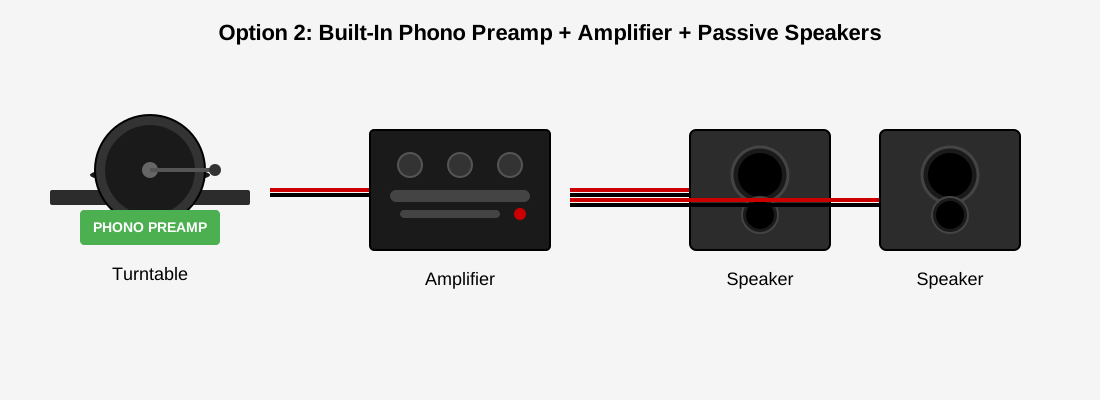
- The turntable's built-in phono preamp boosts the signal and restores the frequency balance.
- The signal then goes to the amplifier, which drives the passive speakers.
A classic with no needless complications.
Option 3. Phono Preamp in the Amplifier
The same as option two, except the phono preamp is built into the amplifier rather than the turntable. A phono input was standard on vintage amplifiers, and today you'll still find one on some modern amplifiers and receivers.
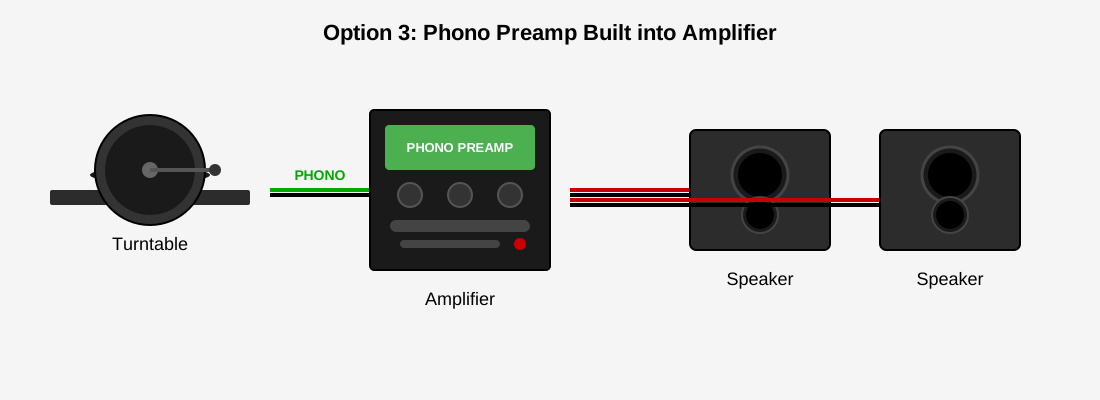
If you already own such an amplifier, you don't need to chase a built-in preamp when choosing a turntable — put the money into a good cartridge instead.
Option 4. External Phono Preamp, Amplifier, and Passive Speakers
The most flexible setup, with the most room to grow.
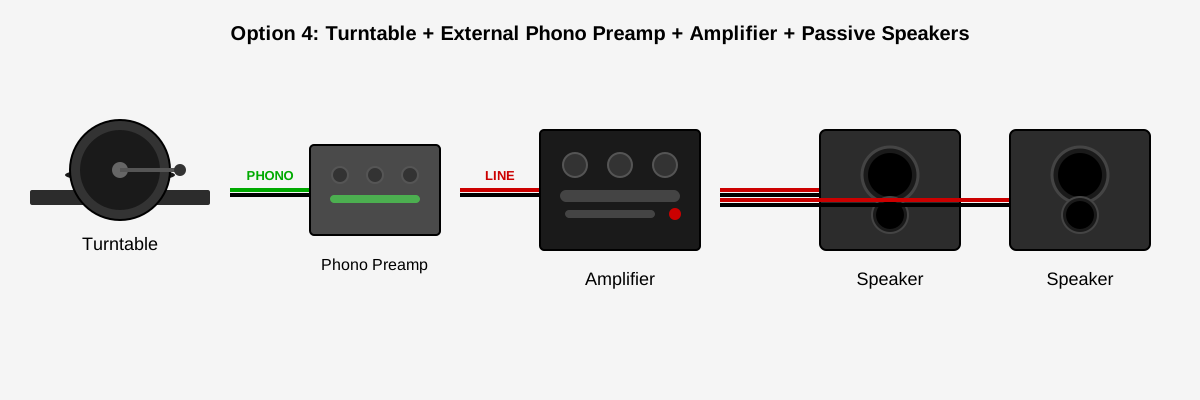
- An external phono preamp can be matched to your cartridge and your taste.
- Each component can be swapped independently without affecting the rest.
Decided to move to an MC cartridge? You replace only the preamp, not the whole system. No wonder audiophiles love this setup.
Option 5. Powered Speakers
Powered speakers — that is, speakers with a built-in amplifier — have become a popular alternative to the classic "amplifier plus passive speakers" pairing.
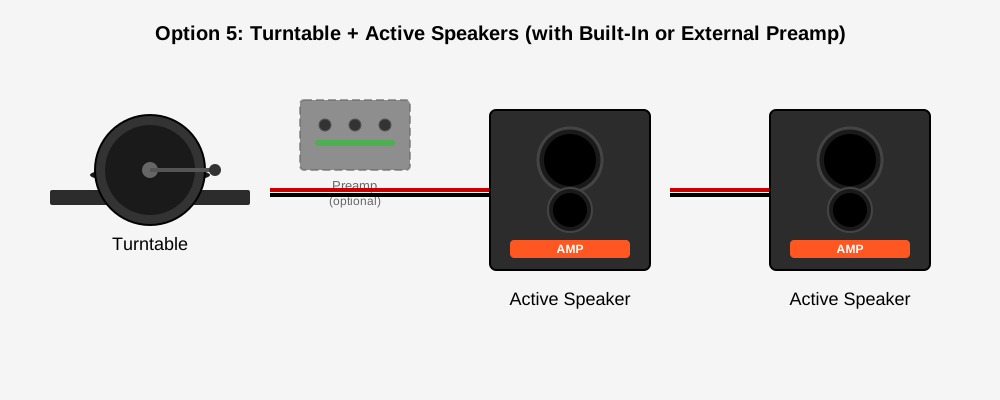
- Many of them already include a phono preamp, Bluetooth, plus optical and USB inputs.
- Some models are built for serious listening and sound great without any external amplifier.
In this setup, the phono preamp can be built into the speakers, built into the turntable, or sit separately. It's a good choice if you want to save space, avoid a stack of boxes, and stream music through the same speakers.
Each of these setups serves its own priorities: simplicity, sound quality, room for upgrades, or saving space. Pick yours — and enjoy the warm sound of vinyl.
What Turntables Have Lost in 40 Years
And finally, the sad part. Technology has leaped ahead, yet turntable features have shrunk to a depressing minimum. Even some Soviet-made players could do things that make many of today's models look downright pale.
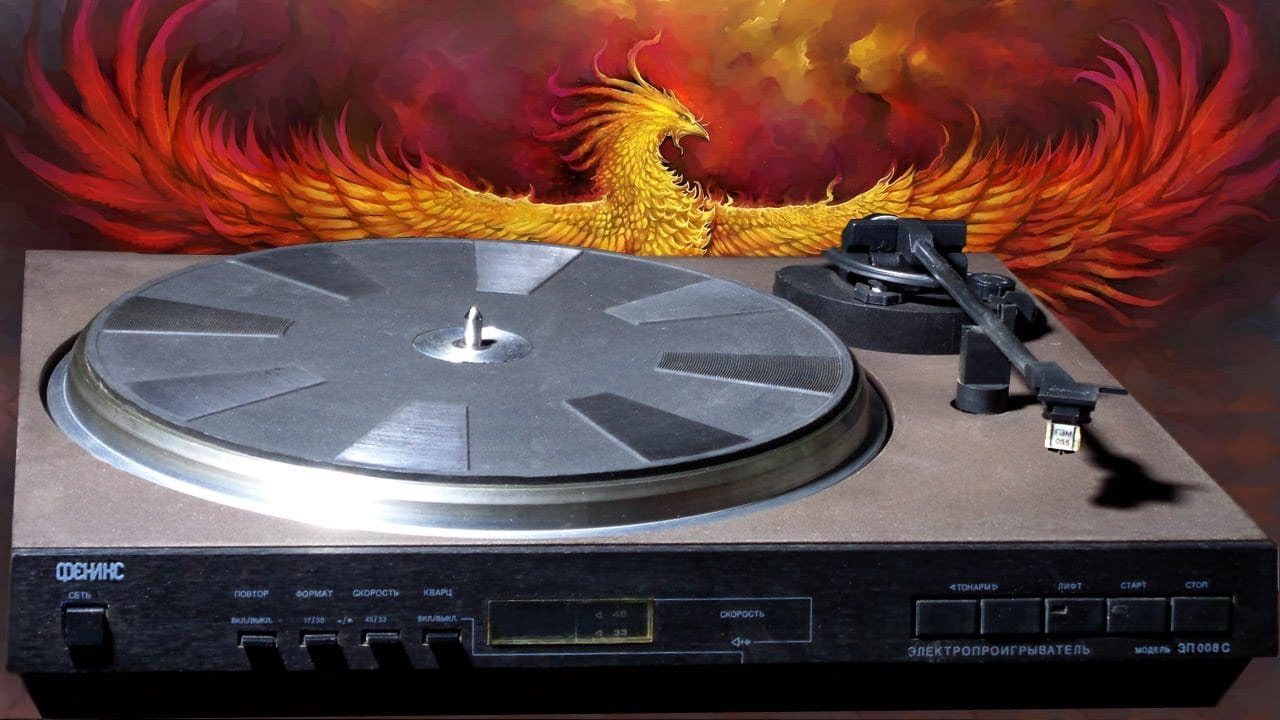
The best turntables of the 1980s and 1990s could:
- detect the record size on their own — no input from the listener needed;
- switch speeds electronically, with quartz lock — no moving the belt by hand, everything precise and instant;
- play a side fully automatically, and repeat it if you wished;
- counter skating force with an electromagnet — the tonearm stayed in the groove so firmly that even a noticeable knock on the cabinet didn't interrupt playback;
- enable the output only after the stylus touched down — the speakers didn't get a thump when the tonearm was lowered;
- control the tonearm with buttons — lifting, lowering, and skipping to the next track without opening the lid;
- fine-tune speed (pitch) against a built-in strobe — today you usually have to buy separate tools for that kind of check;
- and much more.
Looking at today's market, it's hard to shake the feeling that we've landed on the Planet of the Apes: manufacturers diligently copy the outward signs of a once-great civilization, but much of its ingenuity has been lost.
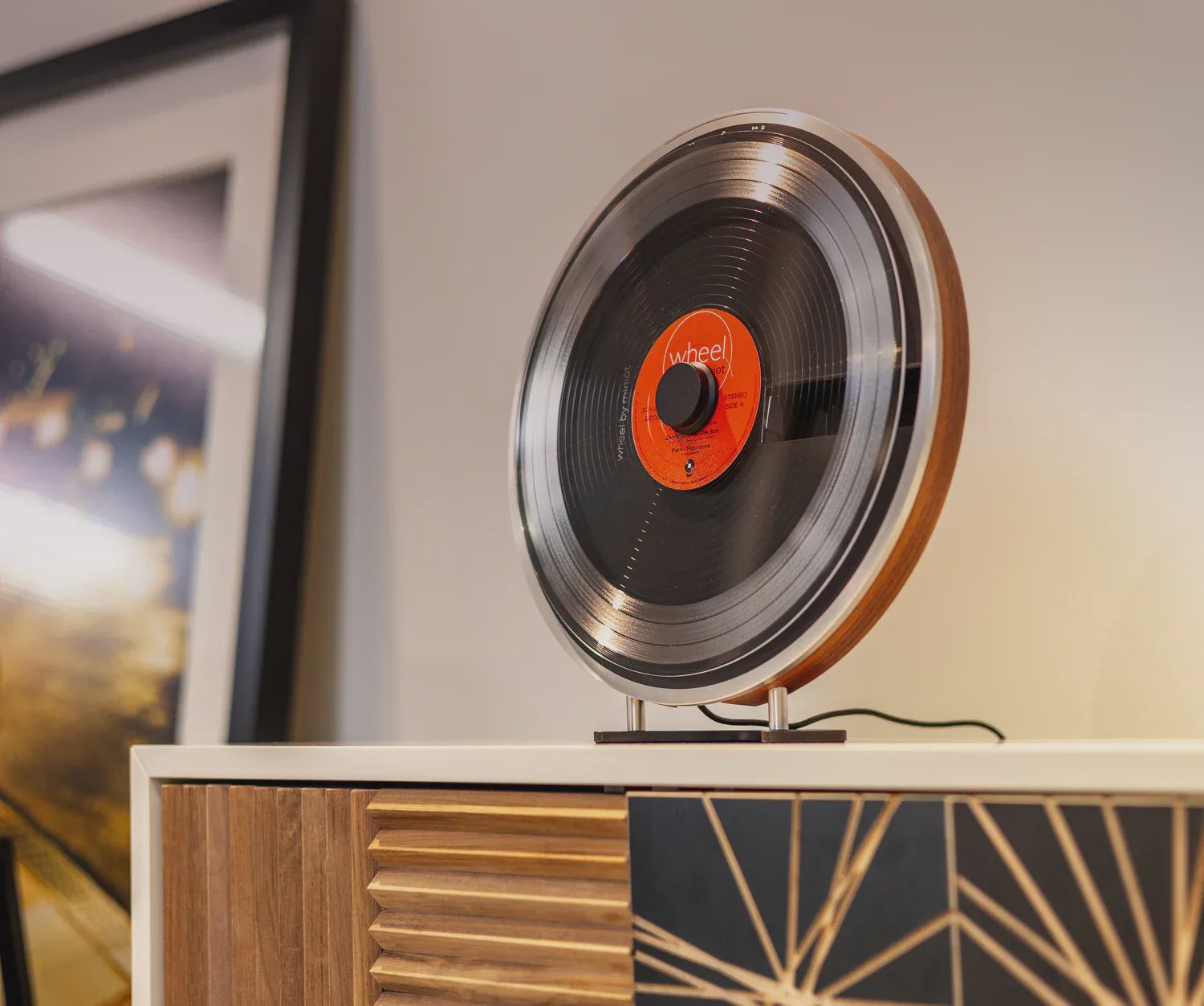
One of the rare attempts to bring back those capabilities is the Miniot Wheel 2. It's a fully automatic turntable that detects the record size and track positions by itself, and you can skip tracks and adjust the volume with a few taps on its touch panel. The catch is the price: around €2,000 — far more than most hobbyists are willing (or able) to spend on a turntable.
The photos in this article come from the sources listed in their captions, mostly the official websites and pages of the manufacturers; all rights to the images belong to their owners.
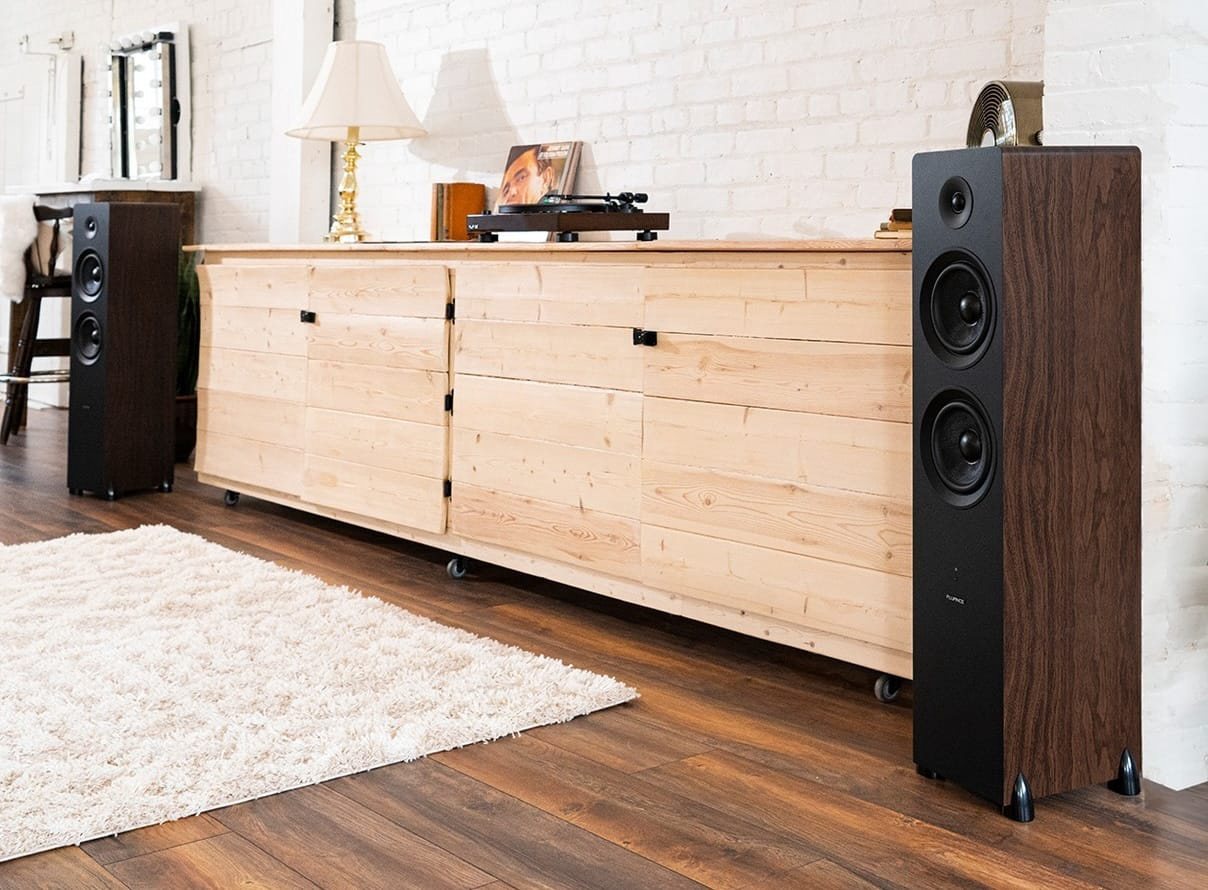
At the time of writing, my main system is a Fluance kit: a Reference RT85 turntable, a PA10 phono preamp, Ai81 Elite powered two-way floorstanding speakers, and a DB10 subwoofer with a 10-inch driver and a front-firing port.