

The Pole Is to Blame
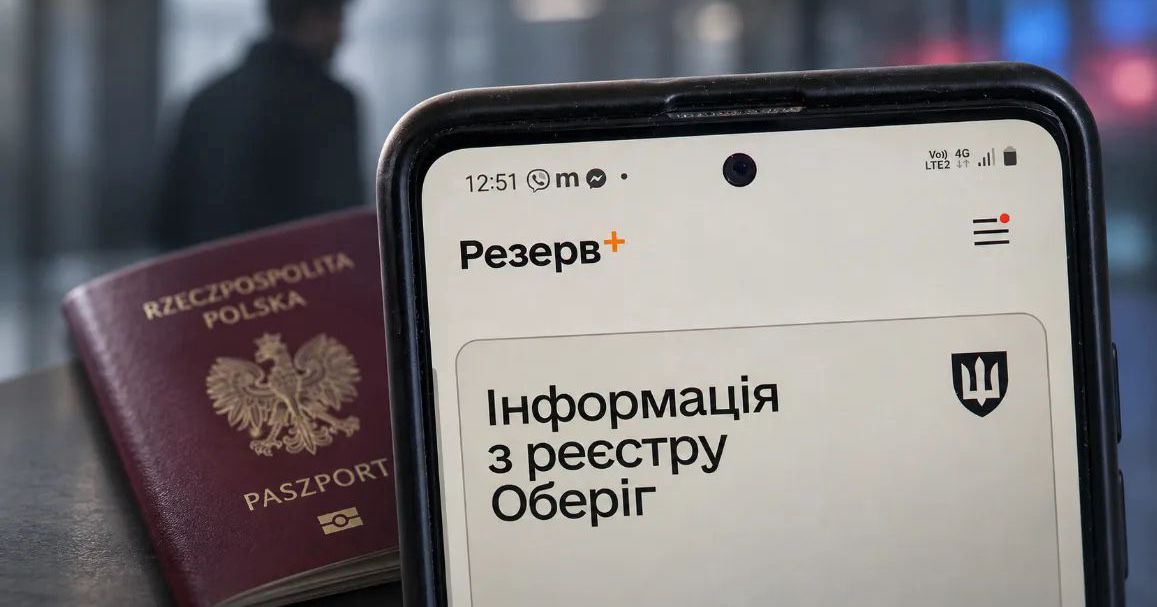
I read a story in Sudovo-Yurydychna Gazeta, Ukraine's legal news outlet, and my eye is still twitching. On August 17, 2025, police in Lviv detained a man and delivered him to the TCC — the military enlistment office — for failing to answer a summons. Sadly, routine news. Except for one detail: the man is a Polish citizen.
He was born in Ivano-Frankivsk and later became a citizen of Poland. His Ukrainian citizenship was terminated by presidential decree No. 387/2017 of November 25, 2017. He got the certificate confirming it in April 2018. In December 2018 the Ukrainian state granted him an immigration permit, then a permanent residence permit, and his stay in Ukraine has been extended to January 2, 2029. In other words, the state confirmed three times, with its own paperwork, that this man is a foreigner.
Yet in Oberih, the national registry of conscripts and reservists, he stayed on the books as liable for military service. The TCC summoned him, he didn't show up, the TCC called the police, and the police brought him in.
He went to court, asking to have the actions of the police and the TCC declared unlawful and his name scrubbed from the military registries. The Ivano-Frankivsk District Administrative Court turned him down in June 2026, and on November 20 the appeals court upheld that ruling.
The courts' reasoning is a genre of its own. Yes, the court says, under the law in force when his citizenship ended, losing citizenship was grounds for removal from the military register. But the loss of citizenship alone doesn't prove that anyone actually carried out the removal. He didn't produce a military ID stamped "removed from the register" — so he hasn't proved it.
Read that again. Taking people off the register is the job of a government office, not of the person on it. The state knew about the lost citizenship because it ended that citizenship itself, by decree. The officials didn't do their job, and the foreigner is the one who has to prove the job was done. Since he can't prove something nobody ever did, he's the one at fault.
On top of that, the court cited Article 26 of the Constitution: foreigners lawfully in Ukraine have the same rights and duties as citizens. A clause about equal rights turned into the reason a Pole can be hauled to the TCC just like any Ukrainian.
And a parting tip: file a written application with the TCC to be taken off the register, and attach a certified copy of the decree, your Polish passport and your military ID. In plain terms, walk back into the very place the police once dragged you to and politely ask the people there to do what they should have done right after the 2017 decree.
What stings most is that Ukrainian courts know perfectly well the principle that should have applied here. This summer the same outlet reported on a ruling by the Fifth Administrative Court of Appeal: a TCC can't hide behind its own paperwork errors, and a person isn't answerable for how a government office keeps its files. Citing European Court of Human Rights case law, the court said outright that the risk of a government body's mistakes must be borne by the state, not the citizen. The principle exists. Just not this time.
The reports don't say what happened to the man at the TCC after he was brought in. But the court has had its say: a foreigner with a Polish passport and a Ukrainian residence permit can be lawfully delivered to the TCC until he fixes someone else's mistake himself.
The state lost a piece of paper. The Pole is to blame.