
We are forced to choose between life and guilt
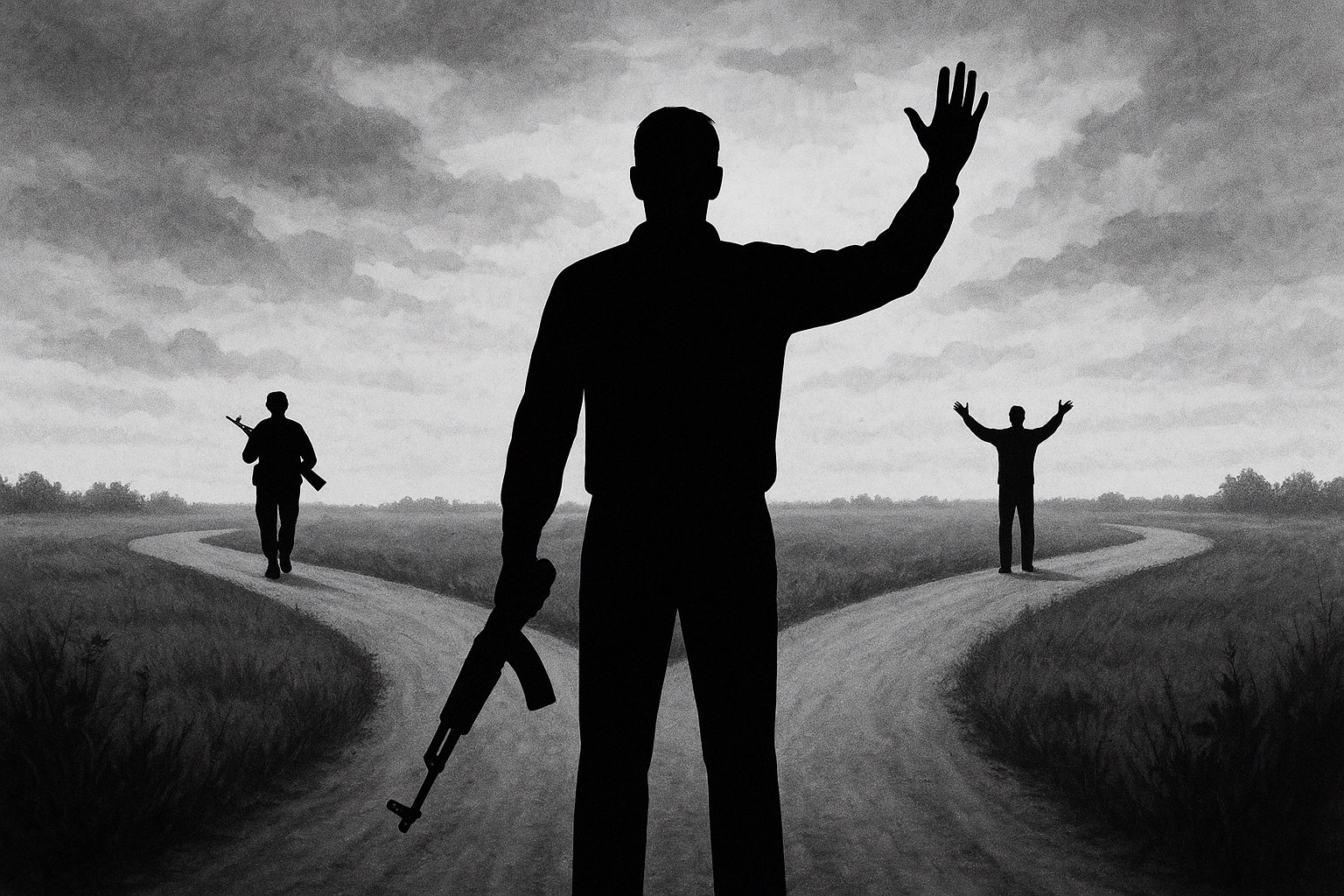
In the context of mobilization (and of justifying the actions of the TCC, Ukraine's military enlistment offices), one often hears the argument that a person who fails to fulfill their obligations to the state has no right to expect protection of their rights. To many, especially in wartime, this view seems logical. However, it is important to understand where responsibility to society ends and where coercion begins — coercion that undermines the very idea of freedom.
Human rights are not a reward for obedience — they are the foundation of freedom.
Human rights are not handed out by the state; they belong to everyone from birth. The rights to life, liberty, personal inviolability, and property are the foundation on which any civilized society is built. These basic rights are enshrined, among other places, in the Constitution of Ukraine. And if rights apply only "on condition" — in exchange for service, loyalty to the authorities, or even death at the front — then they are not rights but privileges that can be taken away at the system's whim.
The link between rights and duties cannot be coerced.
Of course, every society requires mutual effort: some build roads, some heal, some defend. But in a free country, participation in these efforts must come from choice, not fear. Coercion — even under a plausible pretext — always leaves a trace of violence.
A duty stripped of choice is no longer a moral obligation.
If a person is forced to fight simply because they were born in a particular territory, in particular years, and happen to have a penis, while being denied any possibility of refusal — that is not national unity but yet another form of subjugation. Even when the state is under threat, it is important to preserve room for personal decision. Genuine motivation to defend one's country is born not of fear of punishment but of a sense of belonging and conscious choice.
Rights and duties are fundamentally different in nature.
Our rights set boundaries for others: do not deprive me of my liberty, do not harm me, do not interfere in my life. Duties, by contrast, require active effort from us. That is why a person has the right to life and security — even if they owe nobody anything. This is not a moral flaw but a fundamental principle of individual liberty.
Alternatives can and should be discussed.
Voluntary service, fair incentives, transparent terms — all of these increase people's willingness to defend the common good. But where there is no freedom of choice, there can be no genuine solidarity. Where people are shamed or punished for refusing to fight, where men are abducted straight off the streets and forcibly sent to the front — it is no longer about defense, but about coercion.
A free society is not one where everyone thinks alike, but one where everyone has the right to think differently.
Refusing to take part in violence is not a sign of weakness but the conscious decision of a mature person. A society built on freedom must respect that choice and protect even those who are not prepared to serve under arms.
You cannot demand absolute loyalty from those who for years were denied even a basic sense of justice.
Over the years of independence, the Ukrainian state has often demonstrated a systemic inability — and at times an unwillingness — to fulfill its obligations to its citizens. Pervasive corruption, a law enforcement system subordinated to the interests of the well-connected, a shameless imitation of judicial protection, and pressure on businesses through repressive tax practices — all of this has bred deep distrust. In such circumstances, the state's moral right to demand the ultimate sacrifice — a person's life — becomes highly questionable, especially when that person does not see in the state itself the kind of value worth dying for.